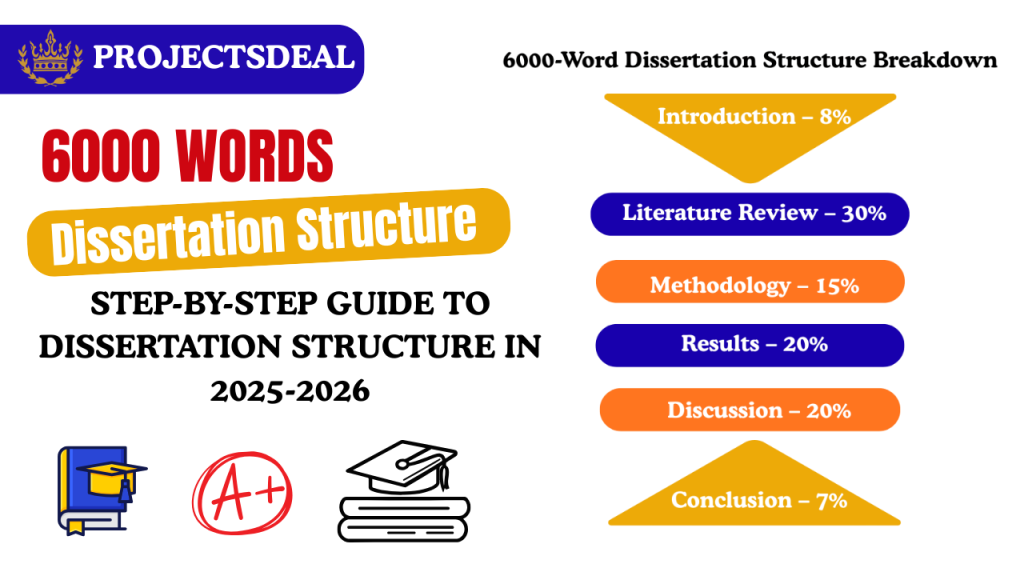
Step-by-Step Guide to Dissertation Structure in 2025-2026
This guide offers a complete, easy-to-follow breakdown of how to structure a 6000-word dissertation. We walk you through every chapter—from the introduction all the way to the final conclusion—helping you organize your arguments with confidence, maintain academic flow, and meet UK university standards without feeling overwhelmed.
Ever sat staring at your laptop, surrounded by piles of notes and journal articles, wondering why your dissertation still isn’t taking shape? You’re not alone.
For most students, the challenge isn’t the research itself—it’s figuring out how to transform scattered ideas into a clear, cohesive academic document. You might spend weeks gathering data and reading literature, only to realize your dissertation feels disjointed, repetitive, or unfocused.
Instead of building a powerful argument, it begins to look like a collection of unconnected paragraphs.
As the deadline approaches, finishing a 6000-word dissertation can feel less like an academic task and more like navigating a maze without a map. That’s exactly why Projectsdeal.co.uk has created this in-depth guide.
Designed to walk you step-by-step through the perfect dissertation structure, this breakdown is based on proven academic standards followed by leading UK universities. Whether you’re writing for business, law, nursing, engineering, psychology, or humanities, this guide provides the clarity and confidence you need to craft a well-organized, high-scoring dissertation.
| Dissertation Section | Suggested Word Count | Purpose / What to Include |
|---|---|---|
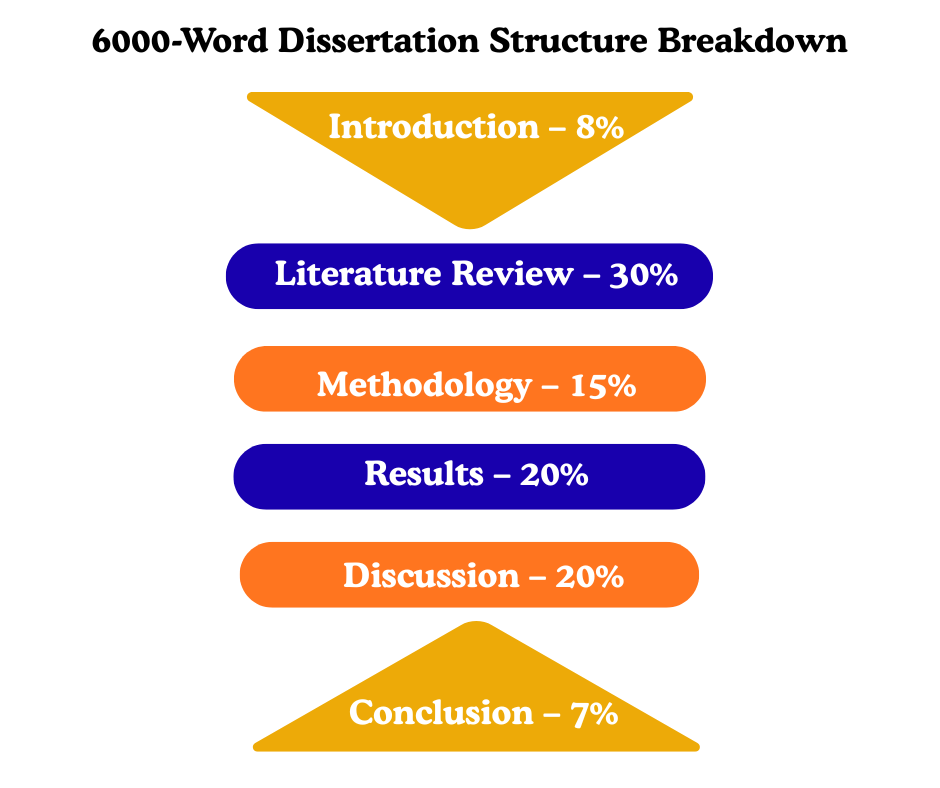
| Introduction | 600 words | Introduces the topic, background, research problem, aims, objectives, and dissertation structure. |
| Literature Review | 1,800–2,000 words | Critically analyses existing research, identifies gaps, discusses theories, and positions your study within academic literature. |
| Methodology | 900–1,000 words | Explains research design, data collection methods, sampling, ethics, and justification for chosen methodology. |
| Results / Findings | 1,200 words | Presents collected data clearly using charts, tables, or thematic categories without interpretation. |
| Discussion | 1,200 words | Interprets findings, links them to literature review, explains implications, strengths, and limitations. |
| Conclusion | 400–500 words | Summarises key findings, reinforces contribution, and suggests future research directions. |
Abstract
The abstract is the first section your readers will see, but it should always be the last part you write. This is because the abstract provides a brief yet comprehensive snapshot of your entire dissertation. It summarises your research aim, key objectives, the methodology you applied, the most important findings, and the main conclusions drawn from your study. Since it captures the essence of the complete project, you can only craft an accurate and polished abstract once all other chapters have been fully written.
What Is the First Sentence of a Dissertation?
The opening sentence of a dissertation carries more weight than most students realise. It not only introduces your topic but also sets the tone for your academic voice and shapes the reader’s first impression of your work. Because a dissertation is a formal research document, your first line should be both engaging and academically appropriate.
A strong opening sentence usually presents the broader context of your research area. For example:
“In recent years, rapid advancements in digital technology have transformed the way organisations manage and utilise data.”
This type of introduction immediately signals the topic area without being vague. In contrast, overly dramatic or generic lines like “Throughout human history…” tend to weaken your academic credibility and should be avoided.
Your initial sentences should then begin to narrow toward your specific research focus. Think of this as moving from wide to narrow—starting with the general field and gradually steering the reader toward the particular issue your dissertation addresses. For instance, if you are exploring data security practices, you might start with technological advancements and then transition into modern cybersecurity challenges.
Another important point: ensure the first sentence is written in your own voice. While starting with a quote may feel appealing, it can give the impression that you are relying on someone else’s authority instead of presenting your own perspective. Since a dissertation represents your original contribution to academic knowledge, it should begin confidently—with your words.
📘Introduction
Chapter 1: The Introduction
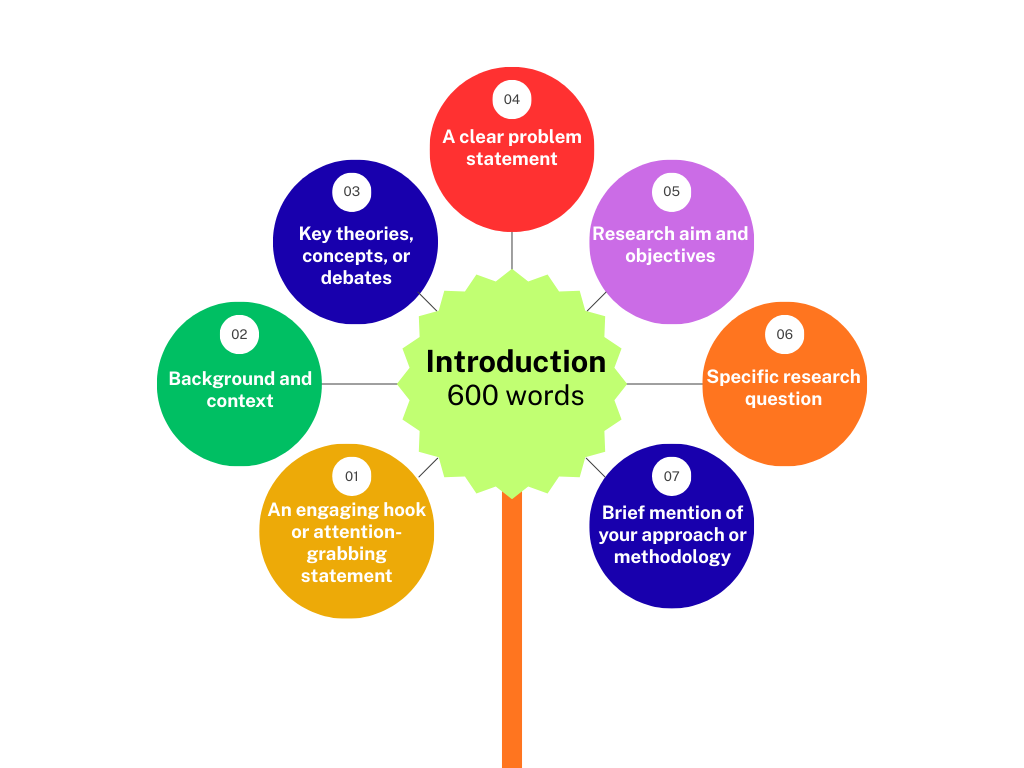
The introduction of your dissertation is one of the most important chapters because it sets the stage for everything that follows. This section provides the background, context, and academic setting of your research topic, while clearly explaining what your study aims to investigate.
A well-crafted introduction should start broadly and gradually narrow down to your specific research focus. Begin with a compelling opening—this could be:
- 📊 A current issue in your field
- ⚡ A surprising statistic
- 🧐 A debated perspective
- 🔍 A gap in existing literature
Once you’ve caught the reader’s attention, highlight the central problem your research addresses. This leads to your main research aim and objectives, which break the aim into achievable steps.
✅ Strong Introduction Checklist
| Section | What to Include |
|---|---|
| Hook / Opening | Engaging statement, statistic, or gap |
| Background & Context | Explain topic context & relevance |
| Theories / Concepts | Key ideas, models, or frameworks |
| Problem Statement | The issue your research addresses |
| Research Aim | Overall goal of your study |
| Objectives | Break aim into achievable steps |
| Methodology Preview | Briefly outline your approach |
📄 Abstract vs. Introduction
The abstract gives a bird’s-eye view, while the introduction guides the reader into the research journey.
| Feature | Abstract | Introduction |
|---|---|---|
| Length | 150–300 words | Longer, detailed (Approx 600 words) |
| Purpose | Quick summary of study | Introduces topic & research context |
| Content | Aim, methods, findings, conclusions | Background, problem, aims, objectives |
| Timing | Written last | Written early |
📚 Literature Review
Chapter 2: Literature Review
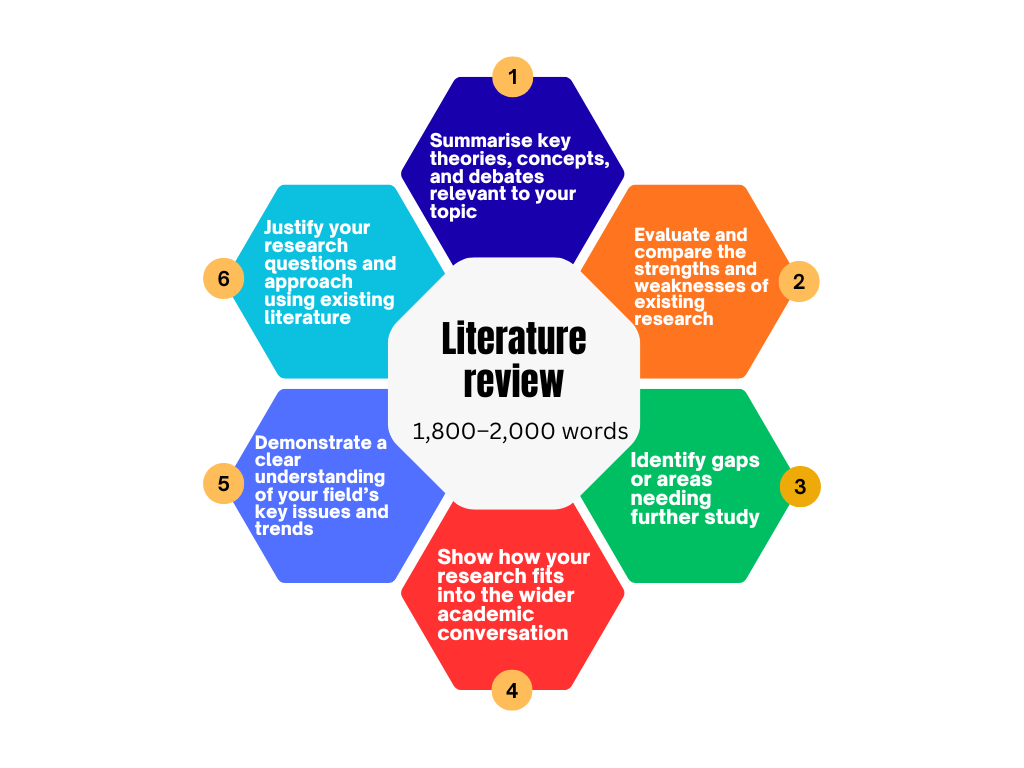
The literature review is one of the most important parts of your dissertation, often making up about one-third of your total word count. It forms the academic backbone of your project by critically examining existing research, identifying key themes, debates, and gaps.
To produce a robust review, draw from a wide range of reliable sources. Peer-reviewed journals are especially important as they provide the most up-to-date and authoritative research in your field.
✅ Key Elements of a Strong Literature Review
| What to Include | Description |
|---|---|
| Summarise Theories | Key concepts, models, and discussions relevant to your topic. |
| Compare & Evaluate | Analyse strengths and limitations of existing research. |
| Highlight Gaps | Identify contradictions, limitations, or unexplored areas. |
| Position Your Research | Show how your study contributes to existing knowledge. |
| Justify Choices | Connect literature to your methodology and research questions. |
💡 Tips from Projectsdeal
🔬 Research Methodology
Chapter 3: Research Methodology
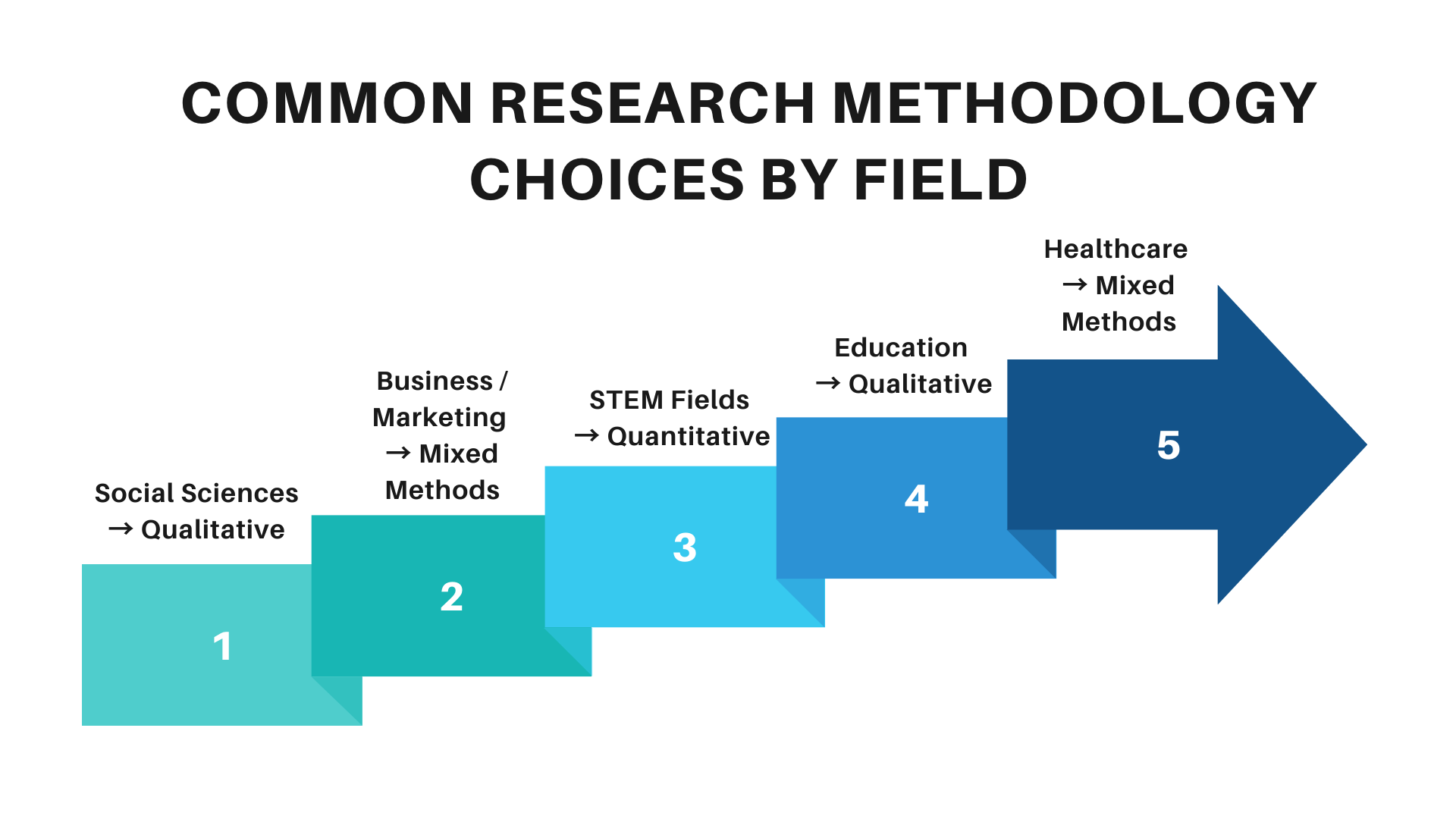
The research methodology is a crucial component of your dissertation because it explains what you did, how you did it, and why those choices were appropriate for your study. It is helpful to begin by briefly restating your objectives to show how your chosen methods align with your research goals.
Common Research Method Approaches
| Approach | When to Use | Examples |
|---|---|---|
| Qualitative | To explore experiences, perceptions, or behaviours. | Interviews, focus groups, content analysis. |
| Quantitative | To collect numerical data or test hypotheses. | Surveys, experiments, statistical analysis. |
| Mixed Methods | For a comprehensive understanding using both data types. | Surveys + Interviews. |
Justification Is Key
A strong methodology does more than list steps—it explains why each decision was made. You should justify your:
- Choice of research design
- Data collection tools
- Sampling strategy
- Analytical techniques
Link these decisions back to your research aims and relevant academic literature to demonstrate that your methods are capable of producing reliable, valid results.
Your methodology should include:
- Research approach
- Participants
- Sampling method
- Data collection techniques
- Ethical considerations
- Data analysis plan
💡 Tips from Projectsdeal
📊 Results
Chapter 4: Results
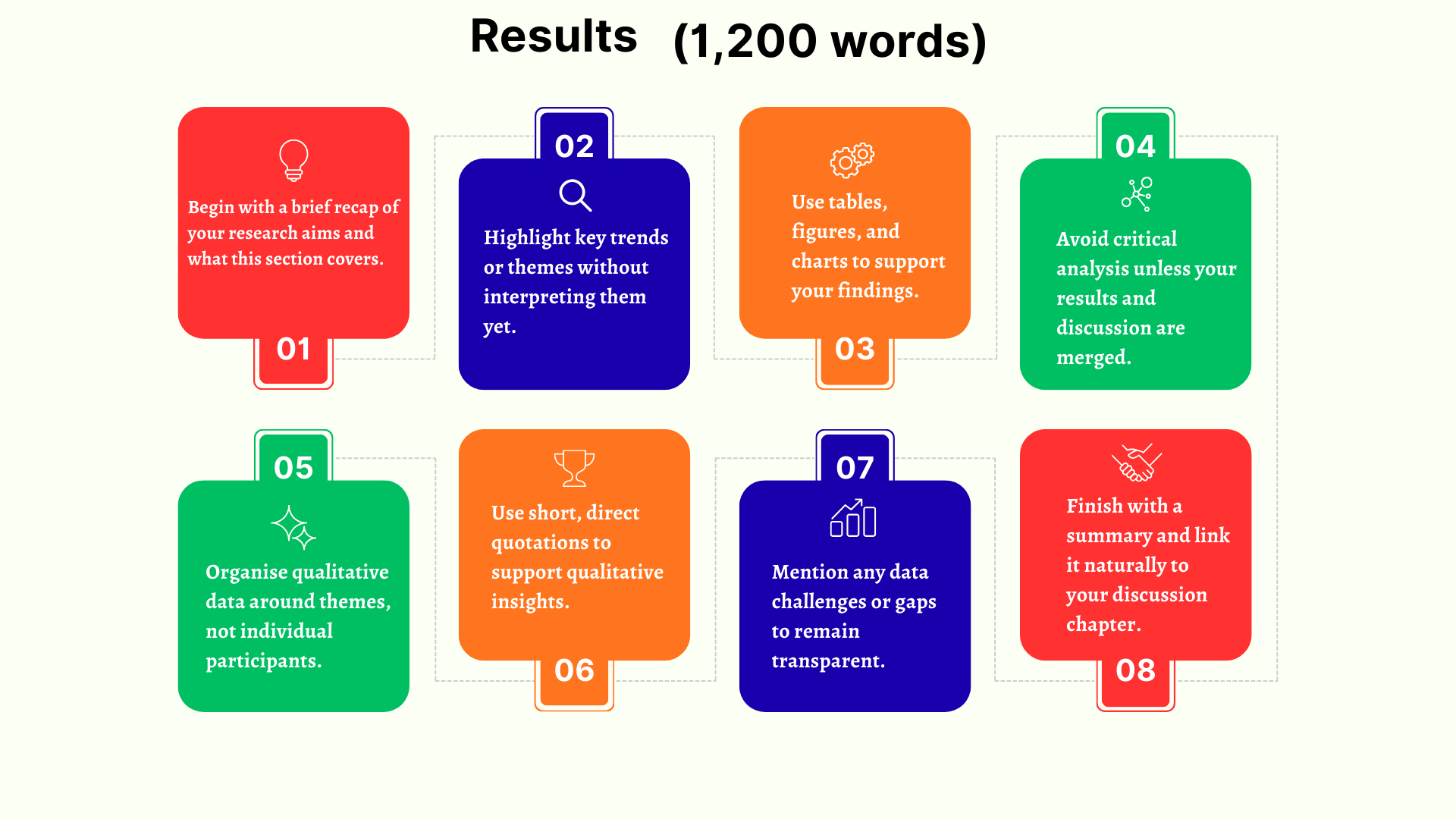
The results chapter is where you present what your research has discovered. Every piece of information should be factual, organised, and directly linked to your research objectives. Identify the most significant patterns, trends, or themes that emerged and describe them concisely.
How to Present Your Results
| Type of Research | How to Present Findings | Key Tips |
|---|---|---|
| Qualitative | Organise around themes or topics emerged from data. | Use short, relevant quotations; group insights meaningfully. |
| Quantitative | Present numerical data, statistical outputs, or hypothesis results. | Use charts and graphs; structure by research questions. |
| All Studies | Visual aids (tables, charts, figures). | Always include clear explanations; don’t rely on visuals alone. |
Best Practices for the Results Chapter
💡 Tips from Projectsdeal
💬 Discussion
Chapter 5: Discussion
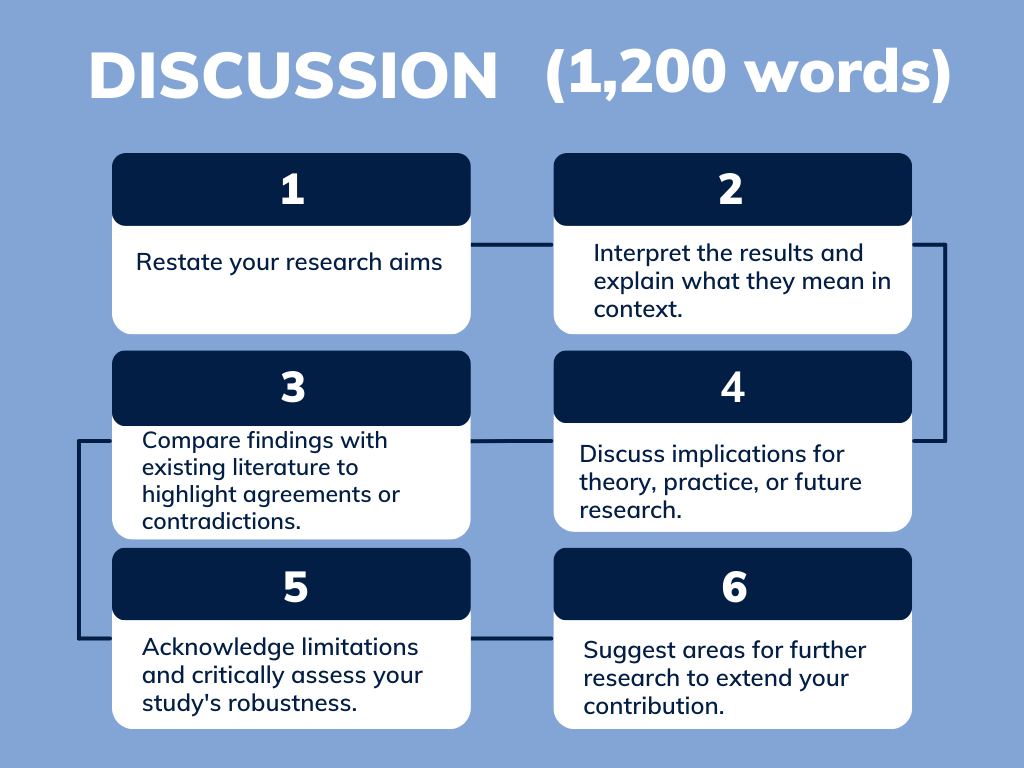
The discussion chapter is where you move beyond presenting data and interpret what your findings actually mean. This is your chance to critically engage with your results, link them to your research questions, and situate them within the broader academic context.
Key Elements of the Discussion Chapter
| What to Include | Description |
|---|---|
| Restate Research Aims | Briefly remind the reader of your objectives and link to findings. |
| Interpret Results | Explain the meaning and significance of your findings. |
| Compare with Literature | Highlight agreements, contradictions, or new contributions. |
| Implications | Discuss relevance for theory, practice, or professional applications. |
| Limitations | Acknowledge constraints such as sample size, methodology, or scope. |
| Future Research | Suggest areas or questions for further investigation. |
Best Practices for Writing Discussion
- Reflect critically on patterns, relationships, and anomalies in your data.
- Evaluate how theories, frameworks, or models contributed to your analysis.
- Be transparent about limitations to strengthen credibility.
- Highlight the wider implications of your findings for academia, practice, or policy.
- Propose future research directions to show your study’s ongoing relevance.
🔚 Conclusion
Chapter 6: Conclusion
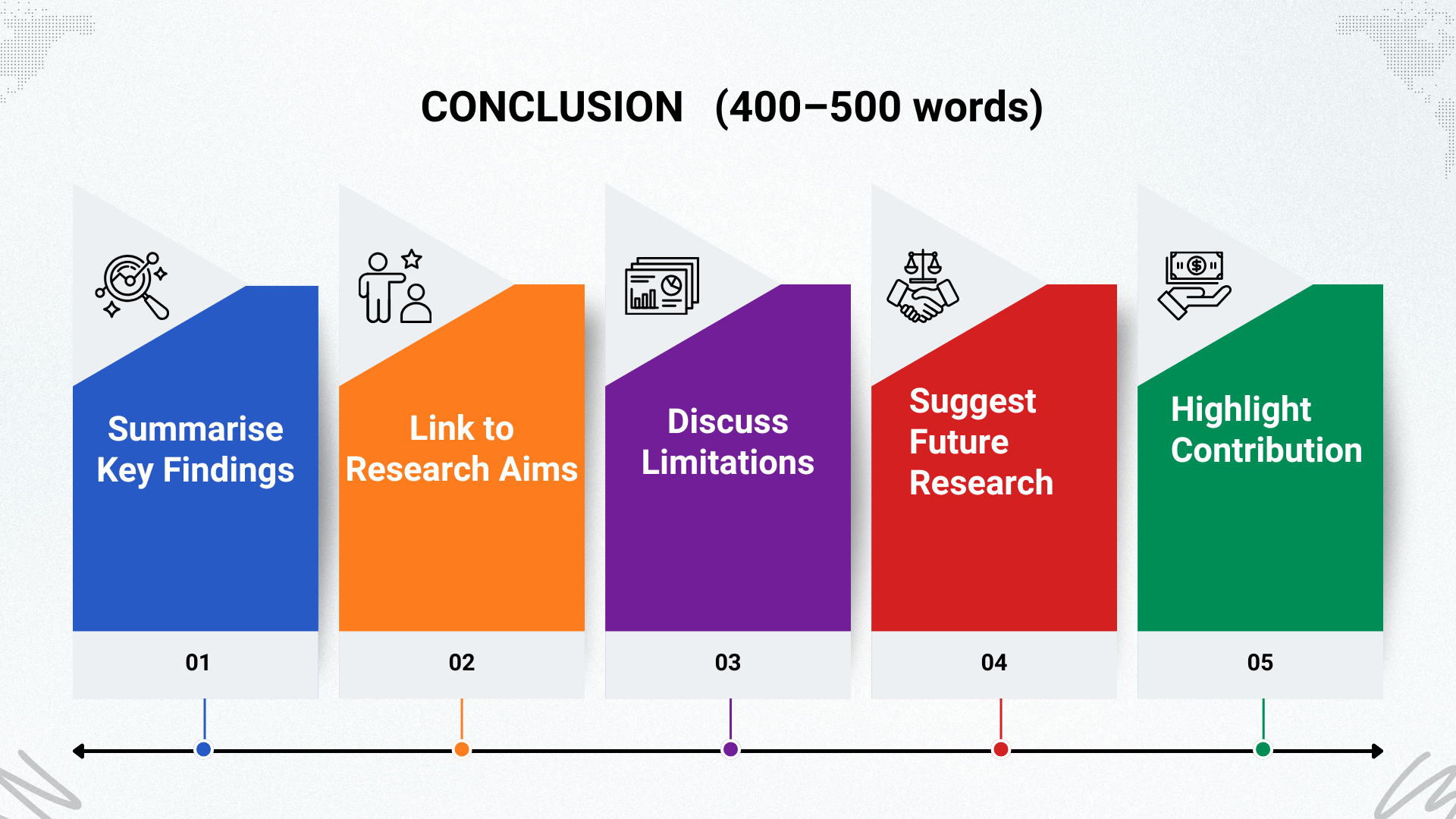
The conclusion chapter ties the entire dissertation together by revisiting the main findings and demonstrating how the original research aims have been achieved. It forms a logical and coherent narrative, addressing core aims and laying a foundation for continued research and practical application.
✅ Key Elements of a Strong Conclusion
| What to Include | Description |
|---|---|
| Summarise Key Findings | Briefly recap main results and their relevance. |
| Link to Research Aims | Show exactly how objectives have been met. |
| Discuss Limitations | Acknowledge constraints of sample, methodology, or scope. |
| Suggest Future Research | Identify areas or questions for further investigation. |
| Highlight Contribution | Emphasise how the study adds value to the field. |
💡 Tips from Projectsdeal
- End with Impact: Reinforce the significance of your work.
- Keep it Concise: Focus on main findings and their implications.
- Link Back to Aims: Clearly show how research objectives were achieved.
- Acknowledge Limitations: Demonstrate transparency and credibility.
- Suggest Future Research: Highlight opportunities to extend your study.
Confidently finish your dissertation with Projectsdeal.co.uk →
📖 References
References & Citations
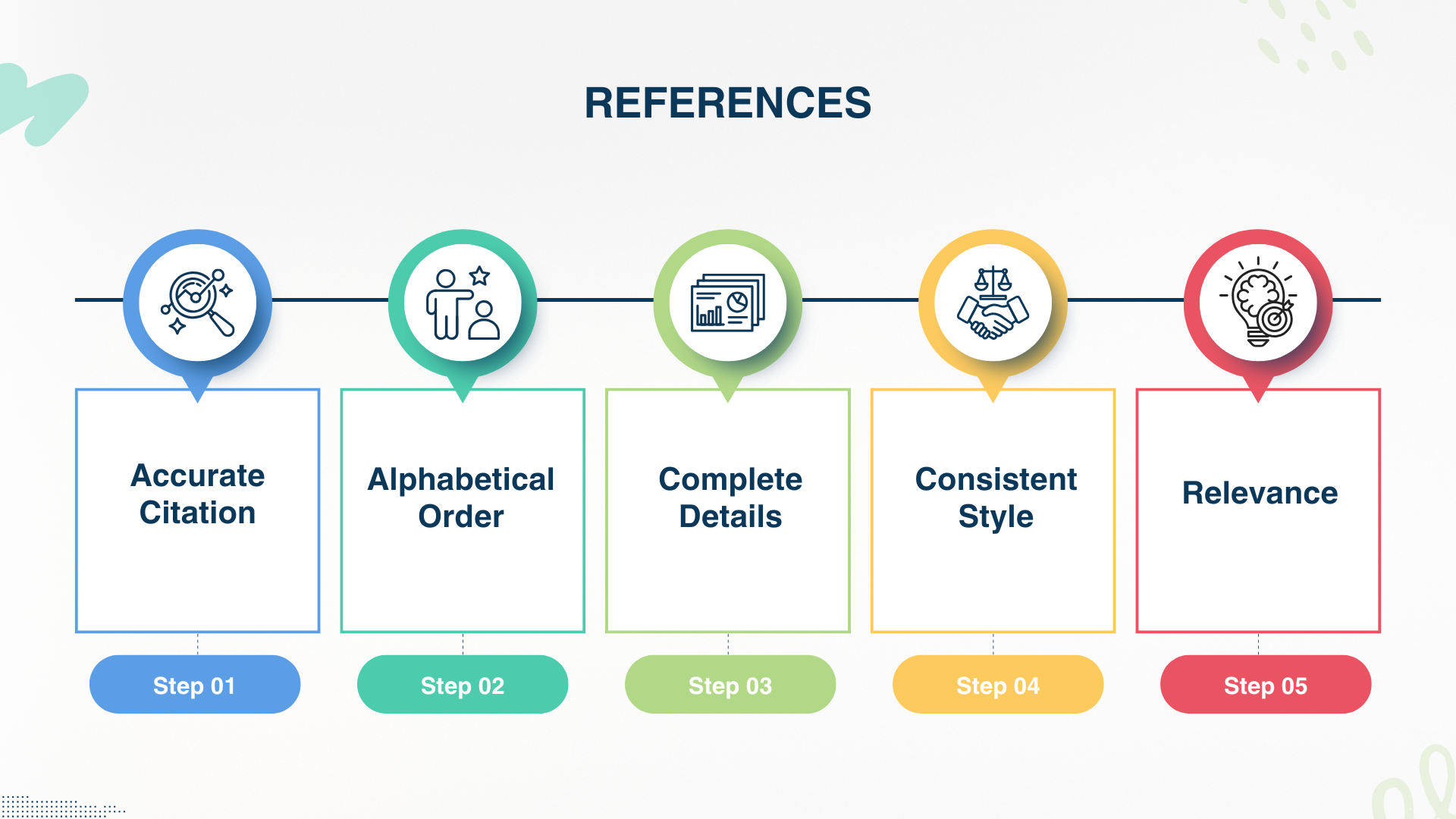
The reference section ensures academic integrity. Every source you quote, paraphrase, or draw ideas from must be accurately cited and organized alphabetically by authors’ surnames.
✅ Key Elements of a Strong Reference Section
| Requirement | Description |
|---|---|
| Accurate Citation | Include all sources quoted or paraphrased in the text. |
| Alphabetical Order | Organise by authors’ surnames for quick navigation. |
| Complete Details | Include author, year, title, and source information. |
| Consistent Style | Follow Harvard or your university’s specific style guide precisely. |
| Relevance | Only include works cited in the text (no background reading). |
Typically, a 6000-word dissertation includes 30–60 references. The exact number depends on your field:
Fewer references, focusing on recent studies and primary data.
More references to cover diverse theories and scholarly debates.
💡 Tips from Projectsdeal
Need help perfecting your bibliography? Contact Projectsdeal.co.uk for expert formatting support.
Appendices: Supplementary Materials
The appendices section acts as a “supplementary materials” folder, holding all supporting information that would otherwise disrupt the flow of your main chapters. This allows you to include extra content without exceeding your word limit.
What to Include in Appendices
| Type of Material | Purpose |
|---|---|
| Questionnaires / Surveys | Provide full versions of tools used in your study. |
| Raw Data Tables | Show detailed data that supports your results. |
| Interview Transcripts | Include full transcripts for qualitative analysis. |
| Ethics Approval Forms | Demonstrate ethical compliance and institutional permission. |
| Consent Documents | Evidence of participant agreement and informed consent. |
| Calculations | Support quantitative analyses, formulas, or raw outputs. |
Best Practices for Appendices
💡 Tips from Projectsdeal
Ready to submit? Make sure your structure is flawless.
Get expert dissertation review today!
✍️ How to Write a 6000-Word Dissertation
Writing a 6000-word dissertation may seem intimidating at first, but understanding the structure and breaking the work into manageable sections makes it much more achievable. The key is to stay organised, plan carefully, and remain focused throughout. Start by fully understanding your topic and crafting a clear research question, which will guide every part of your dissertation.
Step-by-Step Approach
| Step | What to Do |
|---|---|
| Research | Gather sources, review literature, and note key themes. |
| Planning | Outline each chapter, assign word counts, and structure arguments. |
| Drafting | Write one section or chapter at a time, following your outline. |
| Editing & Proofreading | Revise for clarity, coherence, grammar, and formatting. |
Key Tips
- Time Management: Divide the process into stages rather than writing everything at once.
- Use Headings & Subheadings: Keeps your dissertation logical and easy to follow.
- Stay Focused: Keep your research question in mind; avoid unnecessary filler.
- Quality Over Quantity: Prioritise depth, clarity, and academic rigour rather than just hitting word count.
- Revise Thoroughly: Proofread and refine your work to improve readability and accuracy.
💡 Tips from Projectsdeal
- 🎯 Plan Each Chapter: Assign word limits and key points for a balanced structure.
- 🔍 Focus on Relevance: Every sentence should support your research question.
- ✨ Maintain Academic Rigor: Use credible sources and critical analysis.
- 📚 Edit in Phases: First content, then flow, then grammar and formatting.
- ✅ Stay Consistent: Follow your university guidelines for structure and style.
With a clear plan, structured approach, and careful pacing, writing a 6000-word dissertation becomes far more manageable. Breaking it down into steps and focusing on quality ensures a well-organised, high-quality academic piece.
📏 Is 6000 Words Enough for a Dissertation?
A 6,000-word dissertation can be sufficient, depending on your subject, academic level, and university requirements. While many postgraduate dissertations range from 10,000 to 15,000 words, a 6000-word dissertation is often suitable for bachelor’s or master’s level projects. The key is to ensure your content is thorough, focused, and academically rigorous.
Making a 6000-Word Dissertation Effective
| Aspect | How to Approach It |
|---|---|
| Structure | Maintain a clear, logical structure to make your argument impactful. |
| Argument | Present concise, well-reasoned arguments supported by strong evidence. |
| Depth over Filler | Avoid unnecessary repetition; focus on clarity and critical analysis. |
| Research Type | Adapt your word usage: qualitative studies may need more discussion, quantitative studies may need more concise data presentation. |
💡 Tips from Projectsdeal
✅ Stay Structured: Follow a clear chapter-wise layout to maximise impact.
🎯 Focus on Quality: Prioritise clear, evidence-based arguments over word count.
🔍 Plan According to Research Type: Allocate words efficiently based on qualitative or quantitative methods.
✨ Avoid Filler: Every sentence should contribute to your research objectives.
📚 Be Critical: Analyse, interpret, and connect findings to your research question.
🎓 UK Universities and Their 6000-Word Dissertation Criteria
UK universities generally follow similar chapter weightings. Below is an indicative comparison based on common undergraduate and taught master’s guidelines.
| University | Introduction | Lit Review | Methodology | Results | Discussion | Conclusion |
|---|---|---|---|---|---|---|
| Manchester | 10% (600) | 35% (2,100) | 15% (900) | 15% (900) | 20% (1,200) | 5% (300) |
| Birmingham | 10% (600) | 30-35% (2,100) | 15% (900) | 20% (1,200) | 20% (1,200) | 5% (300) |
| Leeds | 10% (600) | 30-35% (2,000) | 15% (900) | 20% (1,200) | 20% (1,200) | 5% (300) |
| Nottingham | 10% (600) | 35% (2,100) | 15% (900) | 20% (1,200) | 15% (900) | 5% (300) |
| Bristol | 10% (600) | 35% (2,100) | 15% (900) | 15% (900) | 20% (1,200) | 5% (300) |
| Warwick | 10% (600) | 35% (2,100) | 15% (900) | 15% (900) | 20% (1,200) | 5% (300) |
| University of Law | 10% (600) | 40% (2,400) | 10% (600) | 15% (900) | 15% (900) | 10% (600) |
📝 Common Word-Count Rules Across UK Universities
💡 Tips from Projectsdeal
- 🎯 Check your handbook first
- 📚 Word counts are guides, not rules
- 🔍 Prioritize high-marking sections
- ✨ Balance analysis with evidence
Need help matching your university’s specific criteria? Get expert help from Projectsdeal.co.uk
✨ Final Words
In this guide, we’ve broken down how to structure a 6000-word dissertation step by step, providing clarity on section-wise word counts, content expectations, and strategies for keeping your argument focused throughout.
Careful planning and a well-defined structure are the foundation of a successful dissertation. Without a clear framework, even the strongest ideas can get lost. However, with a structured approach, the writing process becomes manageable, resulting in a high-quality, cohesive piece of academic work.
Ready to Secure Your Grade?
If your schedule is tight or you need professional support, our experienced writers are here to help you craft a polished, well-researched dissertation that meets UK academic standards.
Visit Projectsdeal.co.uk Today Trusted by students across the UK for 20+ years.
Frequently Asked Questions (FAQs)
Writing a 6000-word dissertation becomes manageable when you follow a clear structure. Start with a focused research question, plan each chapter with a word count, and work section by section. Consistent planning, credible sources, and regular editing make the process smooth and achievable.
Yes, 6000 words is enough for many undergraduate and taught master’s dissertations. With a well-defined research question and a clear structure, you can present a strong, focused, and academically sound argument within this word limit.
A 6000-word dissertation is typically 20–24 pages, depending on formatting, spacing, font size, and referencing style. Double-spaced documents usually sit at the higher end of this range.
An abstract for a 6000-word dissertation is usually 150–300 words. It should briefly summarise the research aim, methodology, key findings, and conclusion without going into detailed explanation.
The 3-paper rule generally refers to structuring research around three core academic sources or themes to build a focused argument. While helpful for planning, most dissertations benefit from engaging with a wider range of high-quality sources.
Yes, three months is usually enough to complete a 6000-word dissertation if you plan well. Breaking the work into weekly goals for research, writing, and editing helps you stay on track without feeling overwhelmed.
Achieving a 2:1 is very realistic with good planning, clear arguments, and strong academic sources. Most students who follow marking criteria, demonstrate critical thinking, and stay organised perform well.
On average, writing a 6000-word essay or dissertation takes 2–4 weeks, including research and editing. With a solid outline, the writing itself becomes much faster and more efficient.
A 6000-word dissertation usually contains 60–80 paragraphs, depending on paragraph length and academic style. Clear topic sentences and logical flow are more important than paragraph count.
Yes, it’s possible to type 6000 words in a day—especially if you already have a clear outline and research prepared. However, quality improves when writing is spread over multiple sessions with time for revision.
✅ Need expert support with your 6000-word dissertation? 🎓📘
Feeling overwhelmed by tight deadlines, complex research, or strict UK university guidelines? You don’t have to handle it alone. Projectsdeal.co.uk offers professional, end-to-end support across multiple subjects—from choosing your topic 🧠 to the final polish ✨.
👉 Get an Instant Custom QuoteProjectsdeal.co.uk was voted the best dissertation writing service in the UK – featured on Yahoo! Finance.
📚 Related Resources
7500 Words Dissertation Structure
10000 Words Dissertation Structure
12000 Words Dissertation Structure
15000 Words Dissertation Structure