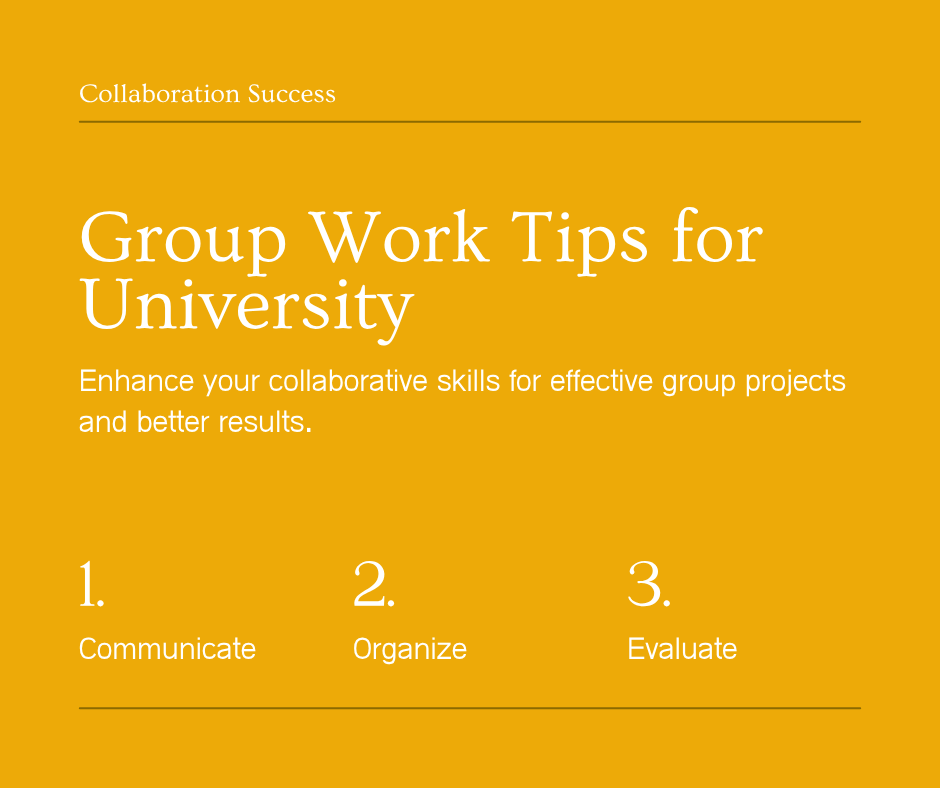

Group assignment tips: how to collaborate effectively and achieve the best possible marks in UK university group work is a question that students across all disciplines — business, engineering, nursing, education, law, and social sciences — consistently ask at every stage of their degree. Group assignments are one of the most challenging assessment formats in UK higher education, requiring simultaneous management of academic content quality, equitable workload distribution, communication across different working styles, and conflict resolution under deadline pressure. This comprehensive guide provides practical, evidence-based strategies for making your group assignment a genuinely productive collaborative experience that results in work everyone is proud of and marks that reflect your collective academic ability.
Group assignments are a regular feature of UK university programmes across business, healthcare, education, engineering, and the social sciences. They are designed to develop the collaborative, communication, and project management skills that employers consistently rank among their highest priorities. Yet group assignments are also consistently among the most stressful academic experiences students report — prone to unequal contribution, personality clashes, communication breakdowns, and the anxiety of depending on others for a mark that affects your own degree. This guide provides practical, evidence-informed advice on how to collaborate effectively in group assignments and produce work that everyone in the group is proud of.
Why Universities Set Group Assignments
Before exploring how to navigate group assignments effectively, it helps to understand why universities set them. Group assignments are not primarily a convenience for academics — they are a pedagogical choice designed to develop specific graduate attributes that individual assessments cannot replicate. Working effectively in teams is one of the most consistently cited graduate skills requirements by UK employers across sectors, and the ability to collaborate, negotiate, manage conflict, divide labour equitably, and communicate clearly with people who have different working styles, knowledge bases, and priorities is genuinely difficult to develop without practice in realistic group settings.
Group assignments also expose students to the reality that knowledge-building and problem-solving in professional contexts are almost always collaborative enterprises. Even in roles that appear largely individual, success depends on the ability to coordinate with colleagues, leverage others’ expertise, and manage relationships with stakeholders who do not share your priorities or perspectives. Understanding the developmental purpose behind group assignments makes it easier to approach them as opportunities for genuine skill development rather than as obstacles to be endured.
Getting Started: Establishing Ground Rules Early
The most common cause of group assignment dysfunction is failing to establish clear expectations and working agreements at the outset. The first group meeting — ideally held as soon as the assignment is set — should focus on establishing the structural and relational foundations that will determine how well your group functions over the course of the assignment. Effective early establishment of group norms dramatically reduces the likelihood of later conflicts and free-rider problems.
Key ground rules to establish in your first meeting include: communication norms (which platform will you use for group communication — WhatsApp, Microsoft Teams, email — and what response time is expected?), meeting schedules (when will you meet, how often, and in what format?), decision-making processes (how will disagreements be resolved?), division of labour (who will be responsible for which sections or tasks, and by when?), and quality standards (what level of work are you collectively aiming for, and what process will be used to review and improve each other’s contributions?). Writing these ground rules down — in a shared document or a brief team charter — creates a reference point that can be revisited if difficulties arise later.
Dividing Work Fairly and Effectively
Unfair distribution of labour — where some group members contribute substantially more than others — is the most frequently cited source of group assignment frustration among UK university students. Research on group dynamics consistently shows that free-riding (the tendency of some members to contribute less when their individual contribution is hard to monitor) is a genuine challenge in group work, and that most students have experienced it. Several structural approaches can reduce the likelihood of free-riding and create conditions for more equitable contribution.
Assigning specific tasks to specific individuals with clear deadlines — rather than leaving all work as a collective responsibility — makes individual contribution visible and accountable. Using a shared project management tool such as Trello, Notion, or Microsoft Planner to track tasks and deadlines creates a transparent record of who has completed what. Dividing the assignment into sections that play to each member’s strengths increases the quality of the overall output and gives each person a genuine sense of ownership over their contribution. Building in intermediate review points — where each member shares their completed section with the group for feedback before the final integration — allows quality issues to be identified and addressed early rather than in a last-minute panic.
Managing Conflict in Group Assignments
Conflict is normal in group work, and the ability to manage it constructively is one of the most valuable skills group assignments develop. Most group conflicts fall into one of three categories: task conflict (disagreements about the content or direction of the work), process conflict (disagreements about how the work should be done), and relationship conflict (interpersonal tensions between group members). Task and process conflicts, managed constructively, can actually improve the quality of group work by surfacing different perspectives and promoting more thorough analysis. Relationship conflicts are more damaging and should be addressed early before they become entrenched.
When conflicts arise, address them directly and early — avoiding the issue typically allows small disagreements to fester into larger ones. Focus on the problem rather than the person: “I think we need a clearer plan for who does what by when” is more productive than “you never do your share.” If direct communication within the group is not resolving the issue, most UK universities have personal tutors, module leaders, or student services staff who can provide mediation support for group assignment difficulties — using these resources is not a sign of failure but of mature conflict management.
Integrating Individual Contributions Into a Coherent Whole
One of the most technically challenging aspects of group assignments is combining contributions from multiple authors into a document that reads as coherent, consistent, and well-integrated rather than a patchwork of different styles, terminologies, and arguments. This integration challenge requires dedicated attention in the final stages of the assignment, and should not be underestimated in terms of the time it requires.
Effective integration strategies include: designating one person as the editor responsible for harmonising style, terminology, and formatting across sections; using a shared style guide agreed in advance (including decisions about British or American spelling, referencing style, use of bullet points vs. prose, heading formats, and citation practices); building in sufficient time for the integration and review stage — ideally at least two to three days before submission — so that any inconsistencies or gaps can be identified and addressed; and reading the complete draft aloud as a group to identify passages where the voice or argumentation shifts noticeably between sections.
Using Peer Assessment Effectively
Many UK universities incorporate peer assessment into group assignments — asking students to rate each other’s contribution to the group work, with these ratings contributing to individual marks. Peer assessment is designed precisely to address the free-rider problem by making individual contribution visible and consequential. If your assignment includes peer assessment, understand how it works before you begin: what dimensions of contribution are being assessed (quality of work, reliability, communication, meeting attendance, teamwork)?, how much does peer assessment affect individual marks?, and what evidence will you be asked to provide?
Take peer assessment seriously: rating all your group members identically regardless of their actual contribution, or being reluctant to give honest feedback to avoid social discomfort, undermines the academic integrity of the assessment process and disadvantages students who have contributed more than others. At the same time, peer assessment should be based on evidence of contribution rather than interpersonal liking — keep records of who completed what by when, and base your assessments on these factual records.
How Projectsdeal Helps Students With Group Work
We provide academic support services for individual students who are contributing to group assignments and want guidance on their own sections, their research approach, or their writing quality. Our specialist academic writers and subject experts can help you develop your individual contribution to the highest possible standard, ensuring that your input to the group work reflects your full academic capability.
Frequently Asked Questions
What should I do if a group member is not contributing?
Address the issue directly and early — first within the group, by having a clear, non-accusatory conversation about expectations and the division of labour. Document your attempts to resolve the issue. If the problem persists, contact your module leader or personal tutor, providing evidence of the contribution imbalance. Most UK universities have policies for managing non-contributing group members, including the ability to adjust individual marks based on peer assessment evidence. Acting on this early gives your module leader time to intervene constructively before the submission deadline.
Is it fair to get the same mark as group members who contributed less?
Most UK universities address this concern through peer assessment mechanisms that allow individual marks to be adjusted based on evidence of differential contribution. Where peer assessment is not built into the assignment, you can raise concerns with your module leader, ideally with documented evidence (meeting minutes, task records, communication logs). The institutional norm in UK higher education is that group assignments are designed to assess collaborative skills as well as subject knowledge, and the ability to manage contribution inequalities constructively is itself part of what is being assessed.
How do I reference sources in a group assignment?
Group assignments follow the same referencing requirements as individual assignments — all sources must be cited accurately using your institution’s prescribed referencing system (typically Harvard or APA in most UK programmes). The additional challenge in group work is ensuring consistency across sections written by different authors. Agree on your referencing style at the start of the project, use a shared reference management tool (Zotero or Mendeley allow shared library creation), and designate one person to check the final reference list for consistency before submission.
Related Study Guides
You may also find these guides helpful: How to Write a Report for University, How to Write an Executive Summary, How to Write a SWOT Analysis, and Harvard Referencing: A Complete UK Guide.
⚠️ Common Mistakes in Group Assignments: Tips on How to Avoid Them
The most damaging mistake students make when they follow group assignment tips: how to collaborate guides without applying them systematically is failing to establish clear roles, responsibilities, and deadlines at the very first group meeting. Groups that begin work without explicit agreement on who is responsible for which sections, when drafts must be completed, how decisions will be made, and how disagreements will be resolved consistently experience the same predictable problems: dominant members take over, quieter members disengage, work is distributed inequitably, and last-minute panic produces inferior results. Spending 30-45 minutes in your first meeting establishing a written group agreement — covering communication channels, meeting schedule, individual responsibilities, milestone deadlines, and conflict resolution procedure — prevents the vast majority of group assignment problems before they arise.
Failing to document individual contributions to the group assignment is a second critical mistake. The Quality Assurance Agency for Higher Education specifies that group assignment assessments must be able to distinguish individual contributions where peer assessment or individual marking components are included. Students who do not maintain clear records of who wrote which sections, who contributed which ideas, and who completed which research tasks have no evidence to present in the event of a peer assessment dispute or an academic integrity investigation into unequal contribution. Use version-controlled shared documents (Google Docs, Microsoft Teams) that create automatic time-stamped records of individual edits, and supplement these with brief meeting minutes that record decisions and task allocations after every group meeting.
Leaving integration and editing of individual contributions until the last minute is a third significant mistake that undermines the overall quality of group assignments. The Office for Students emphasises that group assignments are assessed as coherent, integrated pieces of work — not as collections of individually written sections stitched together. Groups that simply concatenate each member’s sections without careful editing produce assignments with obvious inconsistencies in writing style, argument development, terminology, and referencing format that examiners immediately identify as poorly integrated group work. Schedule a dedicated 2-3 hour “integration session” at least 48 hours before the submission deadline where the entire group reviews the assembled draft together, edits for consistency and flow, and ensures all sections connect coherently.
Finally, many groups fail to proactively address the “free rider problem” — members who contribute significantly less than others — until the damage to group relationships and assignment quality is already severe. UK university group assignment marking schemes at institutions including the University of Manchester, King’s College London, and the University of Bristol typically include peer assessment components specifically designed to identify and penalise free-riding. Rather than waiting until the submission deadline to raise the issue with your tutor, address unequal contribution directly within the group at the first sign it is occurring, using your pre-agreed conflict resolution procedure. If direct discussion does not resolve the issue within one week, contact your module tutor or personal tutor for guidance on your university’s formal process for managing group assignment contribution disputes.
💡 Expert Group Assignment Tips: How to Collaborate UK (2026)
The most effective group assignment tips: how to collaborate successfully begin with deliberate team formation strategy. If you have the opportunity to self-select your group — common in many UK business, engineering, and social science programmes — form groups that combine complementary skills rather than similar ones. An ideal group for a research-heavy written assignment might combine students with strong literature review skills, strong data analysis skills, strong academic writing ability, and strong presentation design ability. Groups formed entirely of students with similar strengths consistently produce more uneven workload distributions and greater interpersonal conflict than groups that explicitly leverage the complementary skills of different members.
Using project management tools effectively transforms group assignment collaboration from chaotic to systematic. Free platforms including Trello, Asana, Notion, and Microsoft Teams (available free through most UK universities) provide shared task boards, deadline tracking, file sharing, and communication threads that keep all group members aligned on progress and responsibilities. Set up your project management tool in your first meeting and use it consistently throughout the project — this eliminates the need for lengthy “status update” meetings that waste group members’ time and creates a transparent, shared record of progress that all group members can access at any time. The University of Leeds, the University of Sheffield, and many other UK institutions actively promote these tools in their group assignment guidance materials.
Effective communication protocols are as important as the quality of your academic work for successful group assignment collaboration. Establish at the outset which communication channel your group will use as the primary channel (WhatsApp, Teams, email — choose one, not three), what response time is expected for messages during working hours, what the procedure is for urgent issues outside normal hours, and how meetings will be conducted (in-person, Zoom, Teams). Groups that use multiple overlapping communication channels — some messages in WhatsApp, others in email, others in Teams — consistently report important information being missed and communication breakdowns that would have been avoided by clear protocol agreement at the outset.
Building individual accountability into your group assignment process through structured peer feedback is one of the most powerful collaboration strategies available to UK university students. Schedule three brief (15-minute) peer feedback sessions at the beginning, middle, and near end of your project timeline. In each session, each group member briefly shares what they have contributed since the last session, what they are working on currently, and what support they need from the group. This structured accountability process — drawn from Agile project management methodology widely used in UK industry — ensures all group members remain actively engaged throughout the project, identifies contribution imbalances before they become serious problems, and creates a supportive environment where members can request help without embarrassment.
🏫 Group Assignment Tips: Trusted by UK Students Since 2001
Since 2001, ProjectsDeal has helped over 20,000 UK students navigate the challenges of group assignments with expert group assignment tips: how to collaborate effectively, manage contributions equitably, and produce work that earns high marks. Our team of 200+ PhD-qualified specialists understands the specific dynamics of UK university group assignments across all disciplines and can provide model group assignment examples, collaborative writing guidance, and individual section support for any part of your group project. With over 45,000 verified student reviews, our group assignment support service is trusted by UK students at all major universities and programme types.
Our group assignment support covers every aspect of collaborative academic work: group assignment structure planning, individual section writing and editing, data analysis support, presentation slide design, peer assessment documentation, and Turnitin-verified original model content that demonstrates what distinction-level group assignment work looks like in your specific discipline. Whether your group needs complete model sections for reference or targeted support on integrating your contributions into a coherent, high-quality final submission, our specialists deliver academically rigorous work tailored to your specific assignment brief. For comprehensive academic writing guidance, explore our expert dissertation writing guide and discover the full range of support available to help you succeed at every stage of your UK degree.
Need Expert Academic Help?
ProjectsDeal provides trusted dissertation, thesis, and essay writing support for UK university students. Get matched with a specialist in your subject area.
Group Assignment Tips: How: Key Insights for UK Students
UK students who understand group assignment tips: how will find it greatly benefits their academic studies. Group Assignment Tips: How is a fundamental area that UK universities expect students to engage with at degree level.
Mastering group assignment tips: how requires both theoretical knowledge and practical application. Regular engagement with group assignment tips: how significantly improves academic performance.
For further guidance on group assignment tips: how, visit the Prospects UK higher education guidance — a trusted resource for UK students.