Mastering systematic review vs. literature review: 2026 guide is essential for UK students. Understanding the difference between a systematic review vs literature review is one of the most important steps in your academic journey. Whether you are writing a dissertation, thesis, or research paper in 2026, getting the systematic review vs literature review distinction right can make or break your work. This comprehensive guide will walk you through everything you need to know about systematic review vs literature review methods, so you can confidently choose the right approach for your project.
📚 What You’ll Learn in This Guide
Systematic review vs. literature review: 2026 guide: Step-by-Step Guide
Your Complete 2026 Guide to Choosing Between a Literature Review and a Systematic Review
Understanding the difference between systematic and literature reviews is essential for UK researchers. UK Government Education highlights the growing emphasis on evidence-based research methods in UK universities. UCAS University Admissions covers how research methodology training has expanded across postgraduate programmes. For global research trends, Prospects UK Careers and HESA Higher Education Data offer broader perspectives on academic research developments.
The Difference Between a Systematic Review and a Literature Review: Research is the backbone of academic excellence, shaping the credibility, depth, and originality of any dissertation, thesis, or research project. One of the most critical decisions students face early in their academic journey is choosing the right review method. This choice determines not only how you gather evidence, but also how strong, structured, and impactful your findings will be.
Among all research approaches, the Systematic Review and the Literature Review are the two most commonly used—and most misunderstood. Many students assume that both serve the same purpose: summarising existing literature. However, this is far from the truth.
Although both methods involve evaluating published studies, they differ significantly in: Understanding the difference between a systematic review and a literature review is crucial for academic success. When comparing a systematic review vs literature review, this point is particularly relevant for UK students in 2026.
- Purpose (broad exploration vs. focused evidence)
- Structure (narrative vs. protocol-driven)
- Methodology (flexible vs. highly structured)
- Search strategy (selective vs. comprehensive and systematic)
- Analysis techniques (descriptive vs. meta-analytic)
- Strength of evidence (moderate vs. highest in research hierarchy)
Understanding these differences is essential—not only to meet academic requirements, but also to strengthen the credibility of your research, improve your grades, and ensure your dissertation stands out. The difference between a systematic review and a literature review affects your research methodology choice.
Since 2001, ProjectsDeal.co.uk, recognised as the UK’s #1 Academic Writing Service, has helped over 100,000 students across top universities successfully navigate the complexities of academic research. Our team of PhD-qualified research experts assists students in producing high-quality, plagiarism-free, and well-structured systematic reviews, literature reviews, and full dissertations. Many students struggle with the difference between a systematic review and a literature review in their dissertations.
Drawing from decades of academic experience and thousands of successful research projects, this comprehensive guide will walk you through everything you need to know about: Grasping the difference between a systematic review and a literature review helps you meet examiner expectations. This distinction is central to the systematic review vs literature review debate that every postgraduate researcher must understand.
- What a Literature Review actually is
- What makes a Systematic Review different
- Core differences in structure, depth, and methodology
- Real examples and use cases
- Strengths and limitations of each
- How to choose the right method based on your topic
- Professional recommendations from expert academic writers
Whether you’re a first-time researcher or preparing an advanced Masters/PhD dissertation, this blog will equip you with the knowledge to confidently choose the right approach—and execute it with academic excellence. The difference between a systematic review and a literature review becomes clearer when you examine their methodologies.
Table of Contents
- What Is a Literature Review?
- What Is a Systematic Review?
- Key Differences Between a Literature Review and a Systematic Review
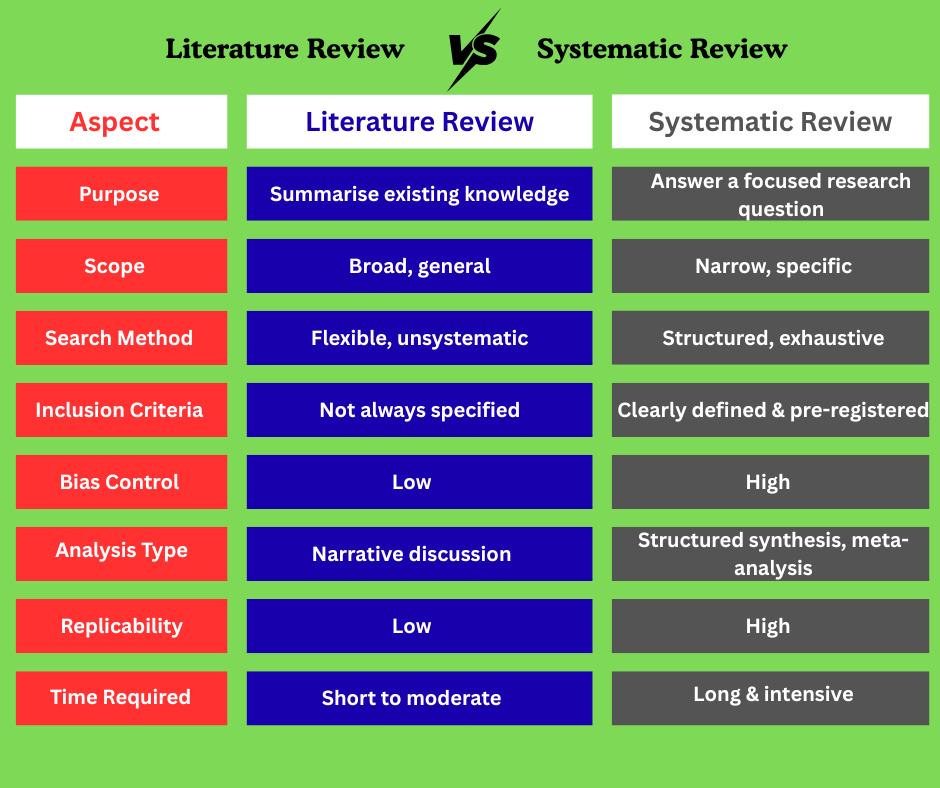
- Systematic Review vs Literature Review: Comparison Table
- Which One Is Better for Your Dissertation?
- Examples of Research Suitable for Each Type
- Steps Involved in a Literature Review
- Steps Involved in a Systematic Review
- Benefits & Limitations of Each
- Expert Tips from ProjectsDeal Researchers
- How ProjectsDeal.co.uk Can Help You
- Conclusion