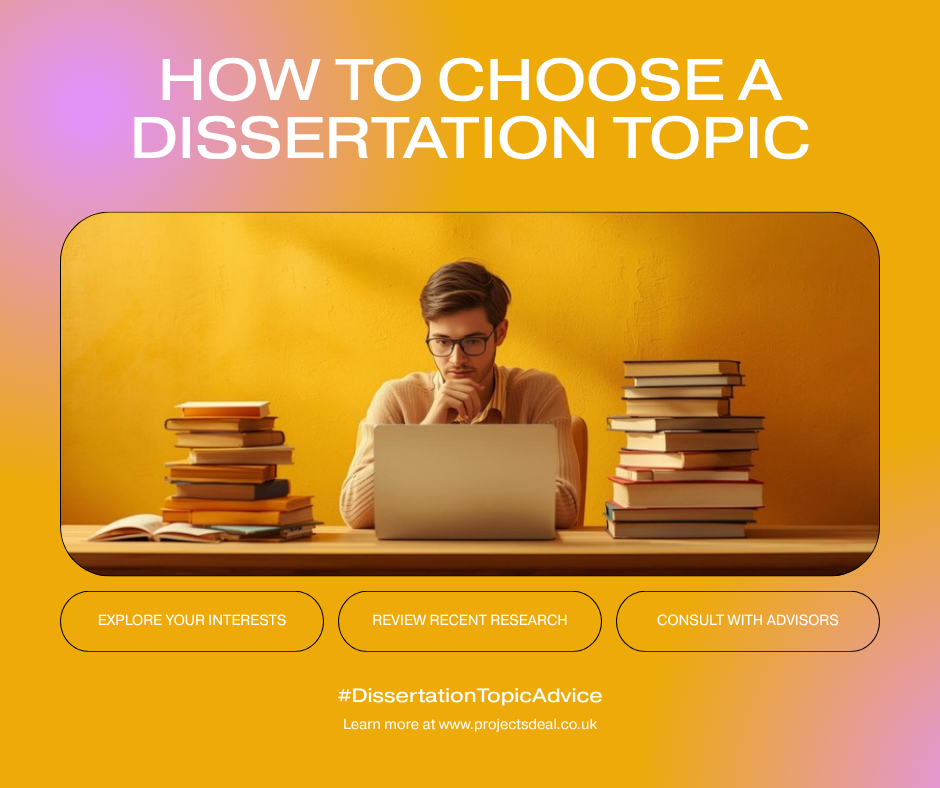

Choose a dissertation topic: step-by-step guidance for UK students in 2026. Learning how to choose a dissertation topic: step-by-step is one of the most critical skills you will develop at university, because your topic determines your entire research journey — from the literature you read to the methodology you apply to the examiners who assess your final submission. This comprehensive guide walks through the complete process of selecting a dissertation topic that is original, feasible, and academically rigorous.
Why Choosing the Right Dissertation Topic Is So Important
Your dissertation topic is the most consequential academic decision you will make during your degree. You will spend months — in many cases an entire academic year — researching, reading, writing, and revising around this single subject. A poor topic choice can make the experience gruelling; a good one can be intellectually energising even through the inevitable difficult phases.
Beyond the personal experience, your topic affects your ability to access relevant literature, secure an appropriate supervisor, obtain the data you need, and produce a dissertation that is both original and methodologically sound. This guide provides a structured, step-by-step process for making this critical decision with confidence.
Step 1: Reflect on Your Interests and Strengths
The first step in choosing a dissertation topic is internal. Ask yourself: which modules in your degree have you found most intellectually stimulating? Which assignments have produced your best grades? Which questions or debates in your field have you found yourself thinking about beyond the classroom? What issues in your discipline have real-world significance that you care about?
Do not underestimate the importance of genuine interest. The motivation to persist through the difficult mid-dissertation period, when progress feels slow and the end seems far away, comes primarily from caring about the question you are trying to answer. A topic that was chosen because it seemed impressive rather than because it genuinely engaged you is a significant risk factor for stalling.
Equally, consider your existing knowledge base. You are not starting from zero — you have two or three years of disciplinary study behind you. Choosing a topic that connects to areas where you have already developed solid foundations means you will spend less time getting up to speed with basic concepts and more time on sophisticated analysis.
Step 2: Survey the Literature to Identify Gaps
Once you have a broad area of interest, spend time reading around that area to identify where the academic debates currently stand and where the gaps lie. Use your university library’s databases to search for recent journal articles and systematic reviews in the area. Pay attention to the “directions for future research” sections at the end of journal articles — these are where researchers signal what they believe the field still needs.
You are looking for questions that have not yet been definitively answered, debates that have not yet been resolved, or contexts in which existing theories have not yet been tested. A good dissertation topic sits at the edge of existing knowledge — where there is something genuinely uncertain that your research can illuminate, however modestly.
Avoid topics that are already exhaustively covered in the literature. If a question has been studied to saturation point, you will struggle to make a distinctive contribution and will find it difficult to argue the originality of your work.
Step 3: Consider Feasibility and Resources
Academic interest and a genuine research gap are necessary but not sufficient conditions for a good dissertation topic. The topic must also be feasible — achievable within your word limit, timeframe, and available resources.
Ask yourself the following questions before committing to a topic:
Data access: Does your methodology require access to participants, organisations, datasets, or archives? Can you realistically access these within your timeframe? Methodological designs that depend on access to specific populations (e.g., clinical patients, senior corporate executives, government agencies) are high-risk unless access is already confirmed.
Ethics approval: Will your study require university ethics approval? If it involves NHS patients or staff, will it require NHS Research Ethics Committee approval, which can take several months? Factor the ethics timeline into your project plan.
Supervisor availability: Is there a supervisor at your institution with the expertise to guide your research? A technically strong topic is undermined by weak supervision. Check with your dissertation coordinator about supervisor availability in your chosen area before finalising your topic.
Scope: Is the topic appropriately scoped for your word limit? A topic that requires a comprehensive review of a vast literature and original primary data collection is unlikely to be manageable in 8,000 words. Be realistic about what can be achieved at the level of your degree.
Step 4: Develop a Focused Research Question
A topic area is not a research question. “Mental health among university students” is a topic area. “What is the relationship between financial stress and depressive symptoms among UK postgraduate students during the cost-of-living crisis?” is a research question.
A good research question has the following characteristics: it is specific and focused; it is genuinely open (the answer is not already known); it can be answered using the data and methods available to you; it relates to an identified gap or debate in the literature; and it is significant — the answer matters to the academic community and potentially to wider practice or policy.
A useful framework for developing your research question in many disciplines is PICO (Population, Intervention or Issue, Comparison, Outcome) — widely used in health sciences. In social sciences and humanities, other frameworks (such as who/what/where/when/why/how) can help structure your thinking.
Test your research question against the feasibility checklist in Step 3. If you cannot realistically answer it with the resources available, narrow or redirect the question until you can.
Step 5: Talk to Your Potential Supervisor
Before finalising your topic, discuss your ideas with your potential supervisor — or, if supervisors are allocated rather than chosen at your institution, with your programme director or the academic who will be guiding your work. This conversation is invaluable for several reasons.
Your supervisor will have a realistic sense of whether your proposed research question is appropriately scoped and methodologically feasible. They will know the relevant literature well and may identify gaps or angles you have not yet considered. They will be able to advise on ethics considerations and data access. And they will tell you honestly whether the topic is one they can effectively supervise — a mismatch between your topic and your supervisor’s expertise is a significant predictor of a difficult dissertation experience.
Come to the conversation prepared. Bring a brief written summary (one page) of your proposed area, your initial research question, the methodology you are considering, and why you are interested in the topic. This demonstrates initiative and gives the conversation a concrete starting point.
Step 6: Review Your Topic Against Assessment Criteria
Before committing to your topic, review it against the assessment criteria in your programme handbook. Ensure that your proposed dissertation will enable you to meet every marking criterion — particularly originality, methodological rigour, critical engagement with the literature, and contribution to knowledge.
If the criteria require a primary research component and your proposed topic is a literature review, you need to redesign your approach. Conversely, if the programme permits literature-based dissertations and you are planning an ambitious empirical study, ensure the scope is manageable. Alignment between your topic, your methodology, and the assessment criteria is essential.
Frequently Asked Questions
What should I do if I cannot decide between two dissertation topics?
Map out the feasibility, supervisor availability, data access, and research gap for each option side by side. If both are genuinely comparable on these dimensions, choose the one you are most intellectually excited about — sustained motivation is a significant predictor of dissertation quality. You can also discuss both options with your supervisor for their professional assessment.
Is it too late to change my dissertation topic after I have started?
This depends on how far you have progressed. Changing topic during the initial planning and reading stage is relatively low-cost. Changing topic after you have collected primary data or completed substantial writing carries a higher cost in terms of wasted work. Speak with your supervisor and programme director as early as possible if you are considering a change — early decisions are almost always recoverable.
Do I need to be an expert in my topic before I start?
No — the dissertation process is intended to develop you into an expert through the research itself. You need enough existing knowledge to identify the gap and formulate an appropriate research question, but deep expertise in the specific area develops as you work. Your supervisor’s expertise complements your developing knowledge throughout the process.
Can I choose a topic from outside my immediate degree subject?
This depends on your programme. Interdisciplinary topics are often encouraged, particularly in social science and professional degree programmes. However, you must ensure that your supervisor has sufficient expertise to guide your work and that the methodology is within your competence. Discuss any interdisciplinary topic with your supervisor and programme director before committing.
Related Study Guides
For further guidance, see our related articles: Best Dissertation Topics for 2026, How to Write a Dissertation: Complete UK Guide, Dissertation Proposal: Step-by-Step Guide, and How to Get a First-Class Dissertation.
Found a topic you like but want a second opinion before you commit? Explore our dissertation writing service — trusted by UK students since 2001.
⚠️ Common Mistakes When You Choose a Dissertation Topic: Step-by-Step Pitfalls to Avoid
When students try to choose a dissertation topic: step-by-step guidance is often ignored in favour of simply picking the first interesting subject they encounter. The most common mistake is selecting a topic that is too broad. “Investigating climate change” or “Examining mental health in UK workplaces” are not dissertation topics — they are subject areas. A dissertation topic must be specific enough to be addressed within the available word count (typically 10,000-20,000 words for a taught Masters) and the available research timeframe (typically 6-12 months). UK universities including the University of Warwick, University of Leeds, and University of Glasgow all publish explicit guidance that dissertation topics must be scoped to a specific context, population, timeframe, or phenomenon.
Choosing a topic purely based on personal interest without verifying data availability is another serious mistake. Many students select fascinating topics only to discover — weeks or months later — that the data they need is not publicly available, that the key industry contacts they planned to interview are unwilling to participate, or that the fieldwork would require ethical approval that cannot be obtained within the academic year. The Quality Assurance Agency UK research training guidelines recommend that students conduct a “feasibility assessment” before committing to a topic, evaluating data access, ethical requirements, methodological fit, and supervisory expertise.
Failing to check supervisor availability is a particularly costly mistake in UK universities. Dissertation supervisors are assigned based on their specialist research interests, and a topic that falls outside any supervisor’s expertise may result in the student being assigned to a supervisor who has limited knowledge of the field. The Office for Students quality requirements specify that students must receive appropriate supervision that matches their research needs — but this requires the student to select a topic that aligns with available supervisory expertise at their institution.
Selecting a topic that has already been researched to saturation is another pitfall. Many students unknowingly replicate existing research without contributing anything new. Before finalising your topic, conduct a systematic literature review using databases such as Google Scholar, Scopus, JSTOR, and your university’s library catalogue. If you find 50+ recent papers that have addressed exactly your proposed question with similar methodology and population, your topic is likely saturated. The strongest dissertation topics address genuine gaps — aspects of the subject that existing research has overlooked, understudied populations, under-explored geographical contexts, or emerging phenomena that have not yet been studied systematically.
💡 Expert Tips to Choose a Dissertation Topic: Step-by-Step UK Best Approach (2026)
UK dissertation experts consistently recommend using the “FINER” framework when you choose a dissertation topic: step-by-step. FINER stands for Feasible (achievable within time, word count, and budget), Interesting (genuinely engaging to you), Novel (adding something new), Ethical (obtainable with appropriate ethical approval), and Relevant (meaningful to your discipline and potential employers or examiners). Running every candidate topic through the FINER checklist before committing to it significantly reduces the risk of later problems.
Talk to your academic supervisor about your topic ideas as early as possible — ideally within the first two weeks of the dissertation module. Experienced supervisors at UK universities have seen hundreds of dissertation topics and can identify potential problems (data access issues, ethical complications, scope problems) that are not immediately obvious to students. They can also suggest refinements, related sub-fields you may not have considered, and relevant literature that will strengthen your proposal. Many students miss this opportunity by waiting until they feel “ready” — but supervisors value early engagement over polished ideas.
Review the dissertation abstract database at your institution’s library before finalising your topic. Most UK university libraries maintain a collection of recent, high-scoring dissertations (typically those awarded 70+ or First-class grades). Studying these dissertations reveals what topics, methodologies, and writing styles your institution’s examiners reward — and helps you calibrate your own topic and approach. You can also use the UK’s national repository of doctoral theses, EThOS (Electronic Theses Online Service, operated by the British Library), which provides free access to over 500,000 doctoral theses submitted at UK universities.
Once you have a shortlist of 2-3 candidate topics, write a 200-word topic proposal for each one. Each proposal should state the specific research question, the proposed methodology, the key data sources you plan to use, and a brief justification of why the topic is original and feasible. Share these proposals with your supervisor and ask for feedback before selecting your final topic. This exercise not only helps you make a better-informed decision but also gives you a head start on your dissertation proposal chapter — the first major piece of writing in the formal dissertation process.
🏫 Choose a Dissertation Topic: Step-by-Step Support Trusted by UK Students Since 2001
ProjectsDeal has been helping UK students choose a dissertation topic: step-by-step since 2001, supporting over 20,000 students across 100+ UK universities in selecting, developing, and completing outstanding dissertation projects. Our team of 200+ PhD-qualified specialists includes topic experts in every major discipline — Business Management, Psychology, Nursing, Law, Engineering, Education, Social Sciences, and more. We provide personalised topic selection consultations, full dissertation proposal writing, and comprehensive dissertation support services, all backed by over 45,000 verified Trustpilot reviews.
Whether you are at the earliest topic brainstorming stage, have a shortlist of ideas, or need help refining and developing your chosen topic into a full research proposal, ProjectsDeal provides expert, personalised guidance. Our specialists draw on deep disciplinary knowledge and extensive experience with UK university marking criteria to help you select and develop a topic that is original, achievable, and positioned for First-class success. Explore our complete dissertation writing guide for comprehensive step-by-step support. Contact ProjectsDeal today for a free topic consultation.
Need Expert Academic Help?
ProjectsDeal provides trusted dissertation, thesis, and essay writing support for UK university students. Get matched with a specialist in your subject area.