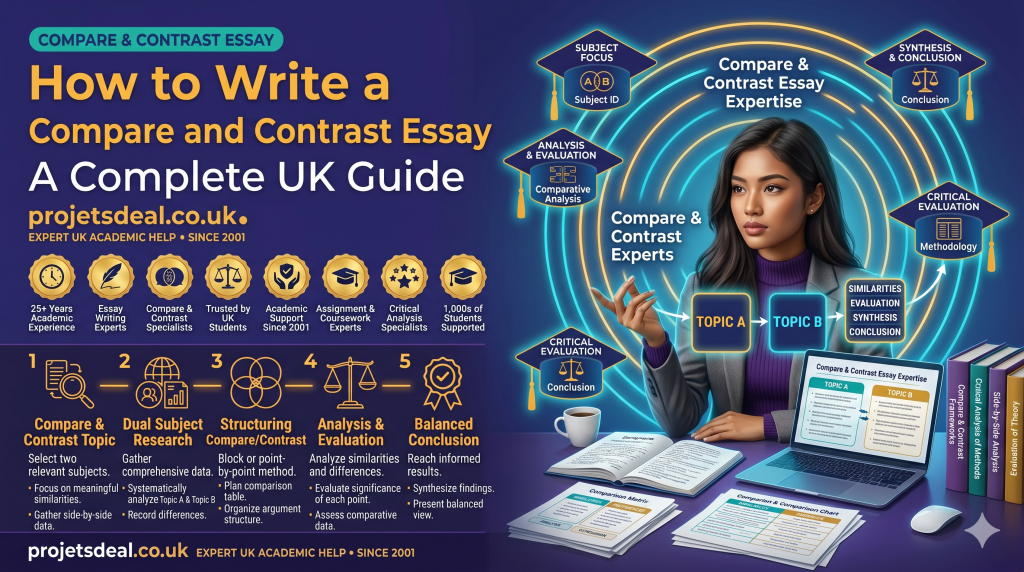
Learning how to write a compare and contrast essay is an essential skill for UK university students. A compare and contrast essay examines two or more subjects to show how they are similar and different — and, crucially, why those similarities and differences matter. UK markers want more than a list of features; they want an analytical point. This complete guide explains the two main structures (block and point-by-point), how to choose criteria, how to build a thesis, and how to keep the essay analytical rather than descriptive.
How to write a compare and contrast essay: Step-by-Step Guide
What Is a Compare and Contrast Essay?
It analyses two or more subjects to reveal meaningful similarities and differences. The goal is not just to describe each one, but to use the comparison to make a point — which is better, why they differ, or what the comparison reveals.
For further guidance on how to write a compare and contrast essay uk, visit the academic writing skills guidance — a trusted resource for UK students and graduates.
Choose Your Criteria
Compare subjects along consistent criteria — the same aspects for each. For two leadership styles you might compare decision-making, communication and outcomes. Clear criteria keep the essay focused and fair, and stop it drifting into two separate descriptions.
Two Structures: Block vs Point-by-Point
✓ Block method — cover everything about subject A, then everything about subject B. Best for short essays.
✓ Point-by-point method — compare both subjects on one criterion, then the next. Best for longer, more analytical essays.
Building Your Thesis
Your thesis should state the point of the comparison, not just that you will compare. “While both X and Y reduce costs, X is more sustainable because…” is far stronger than “This essay compares X and Y.” See our thesis statement guide.
Staying Analytical
Use comparison language (“similarly”, “in contrast”, “whereas”) and always explain the significance of each similarity or difference. A list of features is description; explaining what they mean is analysis — and analysis is what earns marks.
Common Mistakes to Avoid
✓ Two separate descriptions that never connect.
✓ Inconsistent criteria for each subject.
✓ Listing differences without explaining their significance.
✓ No clear thesis or overall point.
✓ Unbalanced coverage of the subjects.
Tips for a Higher Grade
Pick consistent criteria, choose a structure that suits the length, give the comparison a clear point, balance your coverage, and always explain why each similarity or difference matters.
Frequently Asked Questions
What is a compare and contrast essay?
An essay that analyses similarities and differences between two or more subjects to make an analytical point.
What is the block method?
You discuss everything about one subject, then everything about the other; best for shorter essays.
What is the point-by-point method?
You compare both subjects on one criterion at a time; best for longer, analytical essays.
How do I choose criteria?
Pick the same key aspects to assess for each subject so the comparison is consistent and fair.
What should the thesis say?
It should state the point of the comparison, not just that you will compare the subjects.
How do I stay analytical?
Explain the significance of each similarity and difference rather than just listing them.
Can I compare more than two things?
Yes, though more subjects make the essay harder to keep focused and balanced.
What linking words should I use?
Comparison signposts such as similarly, in contrast, whereas and likewise.
How do I structure the conclusion?
Draw the comparison together into your overall point and its significance.
How long should it be?
As the brief requires; clear analysis matters more than length.
Related Study Guides
How to Write an Essay • How to Write a Thesis Statement • How to Structure an Essay • How to Write a Critical Essay
UK students who master how to write a compare and contrast essay uk gain a significant advantage in their academic career. Whether you are in your first year or final year, understanding how to write a compare and contrast essay uk thoroughly will improve your overall academic performance and help you achieve better grades.
In summary, how to write a compare and contrast essay uk is a fundamental aspect of UK higher education. By dedicating time to understanding and practising how to write a compare and contrast essay uk, students can significantly improve their academic performance and develop skills that will serve them throughout their careers.
Want expert guidance on your next essay? Explore our essay writing service — trusted by UK students since 2001.
Structuring a Compare and Contrast Essay Effectively
Two structural approaches dominate compare and contrast essay writing, and choosing the right one for your specific assignment makes a significant difference to the quality of the analysis.
The point-by-point structure organises the essay around the comparative dimensions rather than the subjects themselves. Each body paragraph addresses one aspect or dimension and compares both subjects within that single section. For example, a comparative essay on two economic theories might have sections on their respective epistemological foundations, their treatment of market dynamics, and their policy implications—with each section discussing both theories in direct relation to one another. This structure is generally more analytically rigorous than the block method because it forces genuine comparison at every stage rather than sequential description.
The block structure discusses each subject in a separate, self-contained section before bringing them together in a comparison section or conclusion. Block structures are more appropriate when the subjects require substantial independent contextualisation before comparison is meaningful, or when the essay is relatively short (under 1,500 words) and a point-by-point structure would produce fragmented paragraphs. The key risk with the block structure is producing two separate essays rather than a genuine comparative analysis—ensure the comparison section in your conclusion draws explicitly on both sections and adds analytical insight rather than simply noting differences.
Whichever structure you choose, make the comparative logic of each paragraph explicit. Transition phrases such as “by contrast,” “similarly,” “while X argues…, Y suggests…,” and “unlike X, Y…” signal to the reader that you are engaged in active comparison rather than parallel description.
Common Pitfalls in Compare and Contrast Essay Writing
Several recurring weaknesses appear in compare and contrast essays across UK academic disciplines. Recognising them makes them straightforward to avoid.
Unbalanced treatment: Spending significantly more words on one subject than the other suggests either poor planning or preference rather than genuine comparative analysis. Aim to treat each subject with roughly equal depth and rigour, even if one is ultimately judged to have stronger evidence or a more compelling argument.
Description without analysis: Simply describing what each subject involves without drawing analytical comparisons is the most common weakness in comparative essays. The goal is not to describe two things but to identify meaningful similarities and differences and explain what they reveal about the question you are addressing.
Comparing incomparable dimensions: Effective comparison requires comparing subjects against the same criteria. If you compare the methodology of Theory X with the policy outcomes of Theory Y, you are not making a fair or meaningful comparison. Identify the specific dimensions along which your subjects can legitimately be compared before you begin writing.
Missing a synthesis: Strong compare and contrast essays do not simply identify similarities and differences—they synthesise those observations into a larger analytical point. What do the comparisons you have drawn tell you about the broader question the essay addresses? The conclusion should articulate this synthesis clearly. If you need professional support writing or improving a compare and contrast essay, expert academic writing assistance can help you develop the analytical depth and comparative rigour that UK markers reward.
Need Expert Academic Help?
ProjectsDeal provides trusted dissertation, thesis, and essay writing support for UK university students. Get matched with a specialist in your subject area.