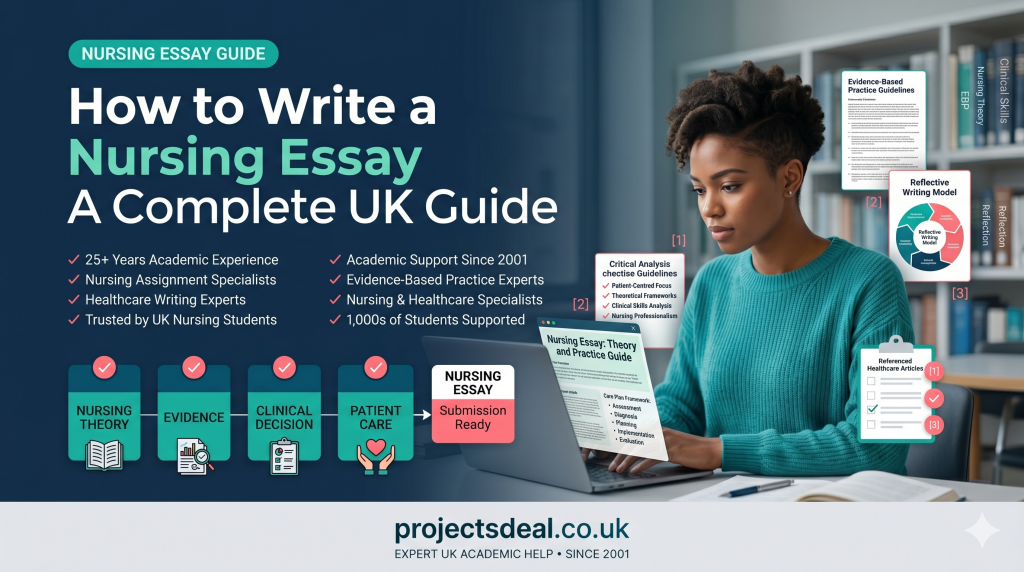
Learning how to write a nursing essay is an essential skill for UK university students. Nursing essays are different from general academic essays: they demand evidence-based practice, reflection, an awareness of the NMC Code, and the ability to link theory to real patient care. UK nursing students are marked on how well they integrate current evidence, reflect critically, and write with the professionalism the register expects. This complete guide explains how to structure a nursing essay, apply evidence-based practice, reflect using recognised models, and reference correctly.
How to write a nursing essay: Step-by-Step Guide
What Makes a Nursing Essay Different?
A nursing essay must connect theory, evidence and practice. Markers look for current, credible evidence applied to patient care, awareness of professional standards such as the NMC Code, and — in reflective essays — honest, structured reflection on your own practice.
For further guidance on how to write a nursing essay, visit the academic writing skills guidance — a trusted resource for UK students and graduates.
Structure of a Nursing Essay
✓ Introduction — the topic, its clinical relevance, and your aim.
✓ Main body — evidence-based discussion linking theory to practice.
✓ Application — how the evidence informs care.
✓ Conclusion — key points and implications for practice.
Using Evidence-Based Practice
Build your arguments on current, high-quality evidence — peer-reviewed research, NICE guidance and reputable clinical sources. Show that you can appraise evidence, not just cite it, and explain how it should shape patient care.
Reflective Models for Nursing
Many nursing essays are reflective. Use a recognised model such as Gibbs' Reflective Cycle or Driscoll's What? So What? Now What? to structure honest reflection on an experience and what you learned. See our Gibbs reflective essay guide.
Professionalism and Confidentiality
Always respect patient confidentiality in line with the NMC Code — never use real names or identifying details, and anonymise any clinical example. Write in a professional, objective tone appropriate to a future registered nurse.
Common Mistakes to Avoid
✓ Describing care without linking it to evidence.
✓ Using outdated or non-credible sources.
✓ Breaching confidentiality.
✓ Reflection that describes but never analyses.
✓ Ignoring the NMC Code.
Tips for a Higher Grade
Anchor every point in current evidence, link theory to real (anonymised) practice, use a reflective model properly, maintain professionalism, and reference precisely — often in Harvard or APA.
The Academic and Professional Context of UK Nursing Essays
UK pre-registration nursing programmes are increasingly academically rigorous, with essay writing forming a significant component of assessment at all three years of the programme. The NMC’s Future Nurse: Standards of Proficiency (2018) requires nurses to demonstrate the ability to critically appraise research, apply evidence-based practice, and communicate complex clinical information clearly — all skills that nursing essays specifically develop and assess.
Nursing essays are assessed on both academic and professional dimensions. The academic dimension includes the quality of the argument, the use of evidence, the coherence of the structure and the accuracy of referencing. The professional dimension includes awareness of clinical standards, understanding of NMC requirements, patient-centred thinking and ethical reasoning. High-scoring nursing essays demonstrate both academic rigour and clinical insight simultaneously.
The most common essay types in UK nursing programmes are: analytical essays (examining a clinical issue, policy, or nursing concept), reflective essays (applying a reflective model to clinical experience), case study analyses (applying nursing theory and evidence to a patient case), and literature reviews (synthesising research evidence on a clinical question).
Key Sources and Frameworks in UK Nursing Essays
Nursing essays must be grounded in evidence-based practice, which means drawing on the most authoritative and current sources available. UK nursing students should be familiar with the following key sources and how to use them in academic writing.
NMC Code (2018) — The Nursing and Midwifery Council’s Code of professional conduct is the fundamental professional standard for UK nurses and midwives. Essays that involve professional practice, ethics or patient care should routinely reference relevant sections of the Code. When discussing dignity, confidentiality, consent, safeguarding or duty of care, the relevant NMC Code clauses provide authoritative professional grounding.
NICE Guidelines — National Institute for Health and Care Excellence guidelines provide evidence-based clinical recommendations for specific conditions and interventions. Referencing relevant NICE guidelines demonstrates evidence-based practice and command of current clinical standards. NICE guidelines are freely available at nice.org.uk.
NHS Long Term Plan and NHS policies — For policy-oriented essays, the NHS Long Term Plan (2019) and relevant NHS England policies provide authoritative sources for discussions of UK healthcare policy and service development.
Cochrane Reviews — For clinical questions about treatment effectiveness, Cochrane systematic reviews are among the highest-quality evidence sources available. Citing a Cochrane review demonstrates sophisticated engagement with the evidence hierarchy.
Peer-reviewed nursing journals — The Journal of Advanced Nursing, Nursing Standard, Nurse Education Today, BMC Nursing, and the British Journal of Nursing are among the most widely cited peer-reviewed journals in UK nursing education.
Evidence-Based Practice in Nursing Essay Writing
Evidence-based practice (EBP) — the integration of the best available research evidence with clinical expertise and patient values — is central to UK pre-registration nursing education. Nursing essays should demonstrate understanding of the evidence hierarchy and the ability to critically appraise research evidence.
The evidence hierarchy in nursing and healthcare places systematic reviews and meta-analyses of RCTs at the top, followed by individual RCTs, cohort studies, case-control studies, cross-sectional surveys, case reports and expert opinion. When arguing for a clinical approach or intervention in a nursing essay, cite the highest-quality evidence available and note the quality of the evidence explicitly.
Critical appraisal is the skill of evaluating the quality, relevance and trustworthiness of research evidence. CASP (Critical Appraisal Skills Programme) checklists are widely used in UK nursing education for appraising different study designs. When citing specific studies, demonstrating awareness of their limitations (sample size, study design, publication date, applicability to UK context) shows evidence-literacy that markers at higher grade levels specifically reward.
Want expert guidance on your next essay? Explore our essay writing service — trusted by UK students since 2001.
Person-Centred Care and Patient Dignity in Nursing Essays
Person-centred care — placing the patient at the centre of care decisions and respecting their autonomy, values and preferences — is a foundational principle of UK nursing practice and is embedded in the NMC Code, NHS Constitution and the six Cs of nursing (Care, Compassion, Competence, Communication, Courage and Commitment).
Nursing essays on clinical topics should consistently demonstrate person-centred thinking. When discussing clinical interventions, care plans or nursing practices, essays should acknowledge the patient’s perspective, discuss how consent and patient preferences are incorporated into care, and engage with the equality and diversity dimensions of the clinical scenario.
Demonstrating awareness of health inequalities — the documented differences in health outcomes experienced by different demographic groups in the UK — is also valued in nursing essays, particularly those addressing public health, chronic condition management or vulnerable populations. Referencing Public Health England data, NHS Digital statistics or relevant academic literature on health disparities demonstrates socially aware, professional thinking.
Frequently Asked Questions
What is a nursing essay?
An academic essay that links nursing theory and current evidence to patient care, often including critical reflection.
How do I structure a nursing essay?
Introduction, an evidence-based main body linking theory to practice, application to care, and a conclusion.
What is evidence-based practice?
Care decisions based on the best current evidence, clinical expertise and patient needs.
Which reflective model should I use?
Common choices are Gibbs' Reflective Cycle and Driscoll's model; follow your brief.
How do I maintain confidentiality?
Never use real names or identifying details, and anonymise clinical examples per the NMC Code.
What is the NMC Code?
The professional standards UK nurses and midwives must uphold, covering practice, conduct and accountability.
What referencing style do nursing essays use?
Usually Harvard or APA — check your university's requirement.
What sources should I use?
Current peer-reviewed research, NICE guidance and reputable clinical sources.
How do I link theory to practice?
Apply the evidence to specific, anonymised care situations and explain how it informs decisions.
How long is a nursing essay?
It varies with the brief; depth of evidence and analysis matters more than length.
What is the most common reason nursing essays receive low marks?
The most consistent feedback on poorly marked nursing essays is insufficient engagement with evidence — making clinical claims without citing research or clinical guidelines to support them. A nursing essay that presents clinical information as general knowledge rather than grounding it in specific, cited evidence will not achieve high marks at UK degree level.
What referencing style should I use for nursing essays?
Most UK nursing programmes use Harvard referencing. Some programmes use APA, particularly those with strong psychology components. Vancouver is used in some medical and biomedical nursing contexts. Always check your module handbook for the specific referencing style required.
How should I use the NMC Code in a nursing essay?
Cite specific clauses of the NMC Code when your essay discusses professional standards, ethics, patient safety, dignity, confidentiality, consent or duty of care. For example, when discussing patient confidentiality, reference NMC Code section 5 (“Respect people’s right to privacy and confidentiality”). Broad references to “the NMC Code says nurses should…” without citing the specific provision are less rigorous than specific citations.
Should I include personal clinical experience in nursing essays?
It depends on the essay type. Reflective essays expect personal clinical experience and first-person voice. Analytical and critical essays typically require third-person, objective writing grounded in evidence rather than personal experience. When discussing clinical examples in analytical essays, use anonymised, general references rather than specific personal cases — unless your ethics approval permits more detailed case discussion.
How do I demonstrate critical thinking in a nursing essay?
Critical thinking in a nursing essay means: evaluating the quality of the evidence you cite (acknowledging limitations), considering different perspectives on a clinical or professional question, applying theoretical frameworks to practical situations rather than just describing them, questioning assumptions rather than accepting them uncritically, and reaching well-reasoned conclusions based on the evidence considered.
Related Study Guides
How to Write a Nursing Care Plan • How to Write a Reflective Essay (Gibbs) • How to Write an Essay • Harvard Referencing Guide
UK students who master how to write a nursing essay gain a significant advantage in their academic career. Whether you are in your first year or final year, understanding how to write a nursing essay thoroughly will improve your overall academic performance and help you achieve better grades.
Need Expert Academic Help?
ProjectsDeal provides trusted dissertation, thesis, and essay writing support for UK university students. Get matched with a specialist in your subject area.